Learning Objectives
By the end of this section, you will be able to do the following:
- Name the fluid component of blood.
- List the three major types of formed elements.
- List and describe the three functions of blood.
Blood is a fluid connective tissue that circulates throughout the body through blood vessels of the cardiovascular system. Like all connective tissues, it is made up of cellular elements and an extracellular matrix. The cellular elements will be considered in detail in the Blood Composition section of this site. Briefly, they are referred to as the formed elements and include red blood cells (RBCs), white blood cells (WBCs), and cell fragments called platelets. The extracellular matrix, called plasma, makes blood unique among connective tissues because it is fluid. This fluid, which is mostly water, perpetually suspends the formed elements and enables them to circulate throughout the body within the cardiovascular system.
An average adult has approximately 4–6 liters of blood, which continuously circulates through blood vessels and the heart.
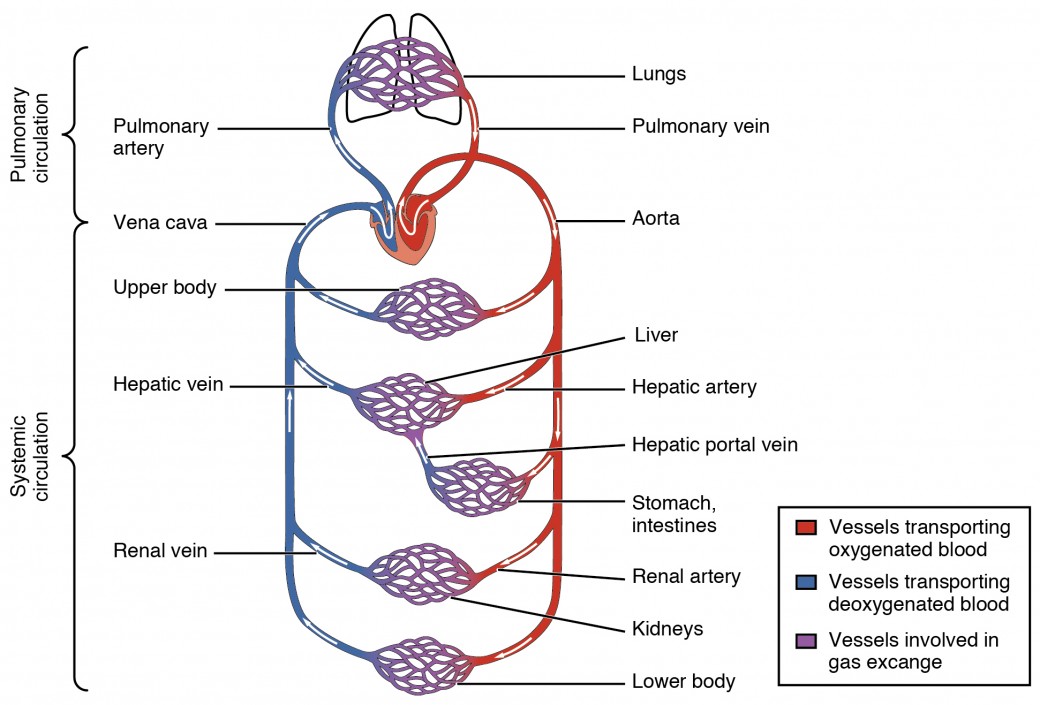
Functions of Blood
The primary functions of blood can be grouped into the following three main categories:
1. Protection includes supporting immune defense and preventing blood loss through clotting.
White blood cells defend against pathogens and abnormal cells. When blood vessels are damaged, platelets and plasma proteins form clots to seal the vessel and prevent blood loss.
2. Transportation includes the delivery of oxygen, nutrients, hormones, and metabolic wastes.
Nutrients absorbed from the digestive tract enter the bloodstream, are processed by the liver, and delivered to body cells. Oxygen enters the blood in the lungs and is transported throughout the body. Hormones released by endocrine glands are carried to target tissues. Blood also collects waste products, such as carbon dioxide and metabolic byproducts, and transports them to the lungs, kidneys, and liver for removal.
3. Regulation involves maintaining body temperature, pH, and fluid balance.
Blood helps regulate body temperature by redistributing heat. During heat exposure, more blood flows to the skin to release heat; in cold conditions, blood is redirected to the core to conserve warmth. Blood also maintains chemical balance: proteins and other components act as buffers to stabilize pH and help regulate fluid balance in body cells.
Practice Activity
References
OpenStax. (2021). Anatomy and physiology 2e (Section 18.1: An overview of blood). OpenStax.
https://openstax.org/books/anatomy-and-physiology-2e/pages/18-1-an-overview-of-blood
Wakim, S., & Grewal, M. (n.d.). 17.5: Blood. In Human biology. Biology LibreTexts.
https://bio.libretexts.org/Bookshelves/Human_Biology/Human_Biology_(Wakim_and_Grewal)/17%3A_Cardiovascular_System/17.5%3A_Blood