Stem Cells
Where do all of your blood cells come from?
Hematopoiesis (Hint: hee-mah-toh-poy-EE-sis) is the process by which all blood cells—erythrocytes, leukocytes, and platelets—are produced from hematopoietic stem cells, primarily in the bone marrow.
First, listen to how the word is pronounced. Then, say it aloud to practice.
Now that you can say hematopoiesis, let’s explore let’s explore how it happens and where it occurs.
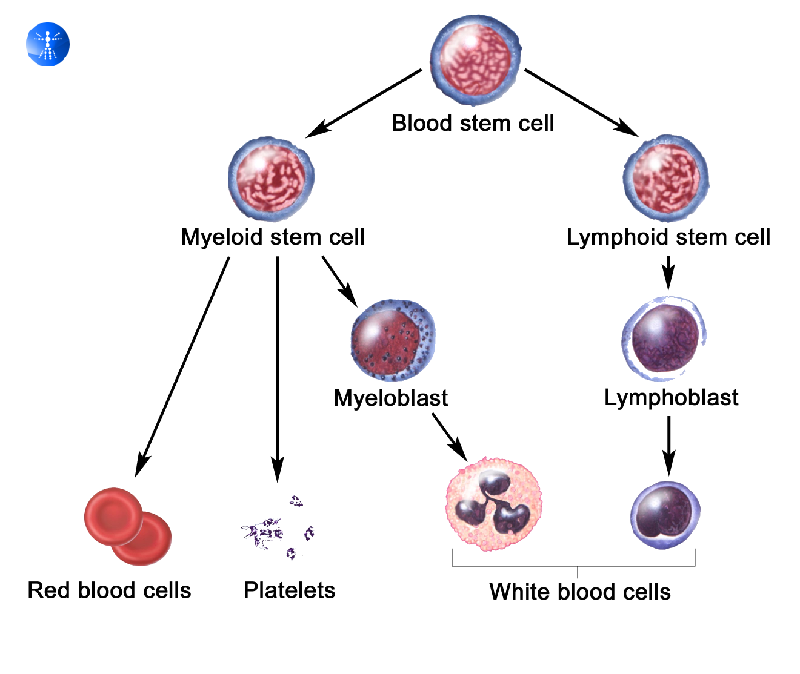
All blood cells originate from hematopoietic stem cells, which are unspecialized cells capable of developing into many different types of blood cells. These stem cells are found primarily in the red bone marrow and serve as the starting point for the formation of red blood cells, white blood cells, and platelets. Stem cells first undergo differentiation, a process in which they become specialized cells with specific structures and functions. Through this process, a single stem cell can eventually give rise to multiple types of blood cells that perform different roles in the body.
Practice Activity
Red Bone Marrow
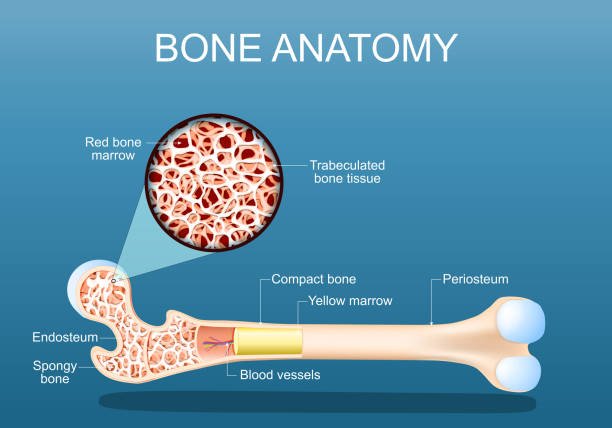
The majority of blood cell production occurs in the red bone marrow, a soft tissue found inside certain bones such as the sternum, ribs, pelvis, and vertebrae. Red bone marrow contains hematopoietic stem cells as well as supporting cells that provide the environment necessary for blood cell development. As stem cells divide and mature, they develop into the three major types of formed elements found in blood: erythrocytes, leukocytes, and platelets.
In children, most bones contain red bone marrow. As a person ages, some marrow is gradually replaced with yellow bone marrow, which stores fat and produces fewer blood cells.
Practice Activity
Differentiation of Blood Cells
During hematopoiesis, stem cells differentiate into two major cell lineages: the myeloid lineage and the lymphoid lineage. The myeloid lineage produces several types of cells including erythrocytes, platelets, neutrophils, eosinophils, basophils, and monocytes, while the lymphoid lineage produces lymphocytes, including B lymphocytes and T lymphocytes that are involved in immune responses.
Each cell type develops specific structures that allow it to perform specialized functions. For example, erythrocytes develop large amounts of hemoglobin for oxygen transport, while leukocytes develop structures that allow them to recognize and respond to pathogens.
Practice Vocabulary
Hematopoietic stem cells are immature, multipotent cells found primarily in the red bone marrow that give rise to all types of blood cells. They can both self-renew (make more stem cells) and differentiate into specialized cells of the myeloid lineage (e.g., erythrocytes, platelets, neutrophils) and the lymphoid lineage (e.g., B and T lymphocytes). These cells are essential for maintaining continuous blood cell production (hematopoiesis) throughout life.
Myeloid lineage refers to one of the two main developmental pathways of hematopoietic stem cells, responsible for producing several types of blood cells. Cells in the myeloid lineage include erythrocytes (red blood cells), thrombocytes (platelets), neutrophils, eosinophils, basophils, and monocytes. These cells are primarily involved in oxygen transport, blood clotting, and innate immune responses.
Practice Activity
References
OpenStax. (2019). Erythrocytes. In Anatomy and physiology 2e. Rice University.
https://openstax.org/books/anatomy-and-physiology-2e/pages/18-3-erythrocytes