Erythropoietin (EPO)
The production of red blood cells is carefully regulated to maintain adequate oxygen levels in the body. The hormone erythropoietin (EPO) plays a major role in this process. EPO is produced primarily by the kidneys and is released when oxygen levels in the blood become low. When EPO enters the bloodstream, it travels to the red bone marrow, where it stimulates hematopoietic stem cells to produce more erythrocytes.
This regulatory system ensures that the body can respond to changing oxygen demands, such as during exercise or at high altitudes.
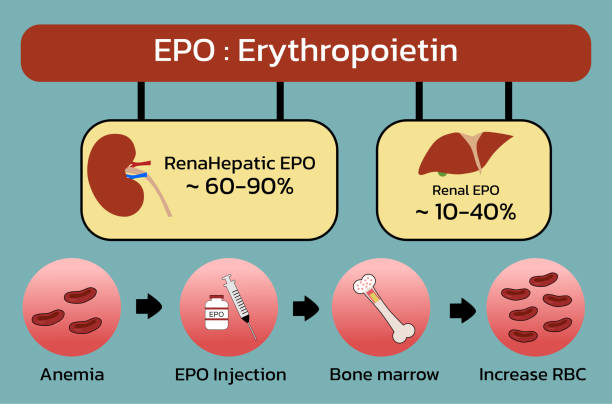
Oxygen Levels and RBC Production
The body constantly monitors oxygen levels in the blood. When oxygen levels decrease, the kidneys detect this change and release erythropoietin. The hormone signals the bone marrow to increase red blood cell production, allowing more oxygen to be transported throughout the body.
When oxygen levels return to normal, erythropoietin production decreases, and red blood cell production slows down. This feedback mechanism helps maintain homeostasis and prevents excessive production of red blood cells.
Practice Activity
Nutritional Requirements
The production of healthy red blood cells also depends on several important nutrients, including iron, vitamin B12, and folate. Iron is a key component of hemoglobin, the protein responsible for carrying oxygen in red blood cells. Without sufficient iron, the body cannot produce enough hemoglobin, leading to iron deficiency anemia.
Vitamin B12 is also essential for red blood cell formation because it is required for proper DNA synthesis during cell division. A deficiency in vitamin B12 can lead to abnormal red blood cell development and reduced oxygen transport.