Hematocrit
The hematocrit is the percentage of blood volume that is made up of red blood cells. It is an important measurement used in medicine to evaluate a person’s blood health. Normal hematocrit levels vary depending on age, sex, and overall health. Low hematocrit levels may indicate anemia, while unusually high levels may indicate conditions such as polycythemia, where the body produces too many red blood cells.
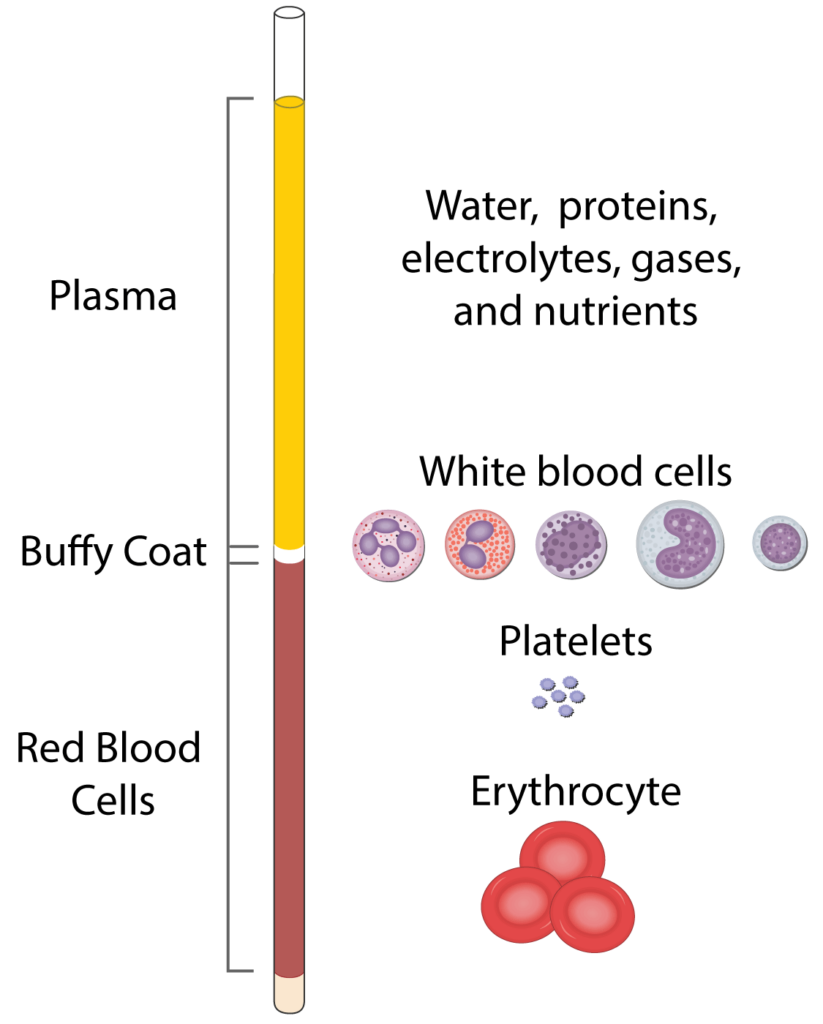
Hematocrit is determined by placing a blood sample in a centrifuge, which spins the blood at high speed and separates it into layers based on density: plasma at the top, a thin buffy coat layer of leukocytes and platelets in the middle, and red blood cells at the bottom. The hematocrit value is calculated by comparing the height of the red blood cell layer to the total height of the blood sample in the tube.
Vocabulary
Hematocrit calculation
Hematocrit (%) = (Height of red blood cell layer / Total height of blood sample) x 100
Example:
If the red blood cell layer measures 45 mm and the total blood column measures 100 mm, the hematocrit is:
45 ÷ 100 × 100 = 45%
This means that 45% of the blood volume consists of red blood cells, while the remaining portion is mostly plasma and a small amount of buffy coat.
Practice Activity
Buffy Coat
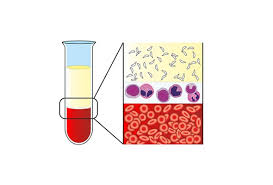
When blood is placed in a centrifuge and spun at high speed, it separates into layers based on density. The top layer consists of plasma, the middle layer is a thin layer called the buffy coat, and the bottom layer contains erythrocytes.
The buffy coat contains most of the leukocytes and platelets present in the blood. Although this layer represents a small portion of total blood volume, it contains the cells responsible for immune responses and blood clotting.
Practice Activity
Proportions of Blood Components
Blood is composed of approximately 55% plasma and 45% formed elements. Among the formed elements, erythrocytes make up the largest proportion, while leukocytes and platelets account for a much smaller percentage.
Understanding the relative proportions of these components helps scientists and healthcare professionals interpret laboratory results and diagnose medical conditions.